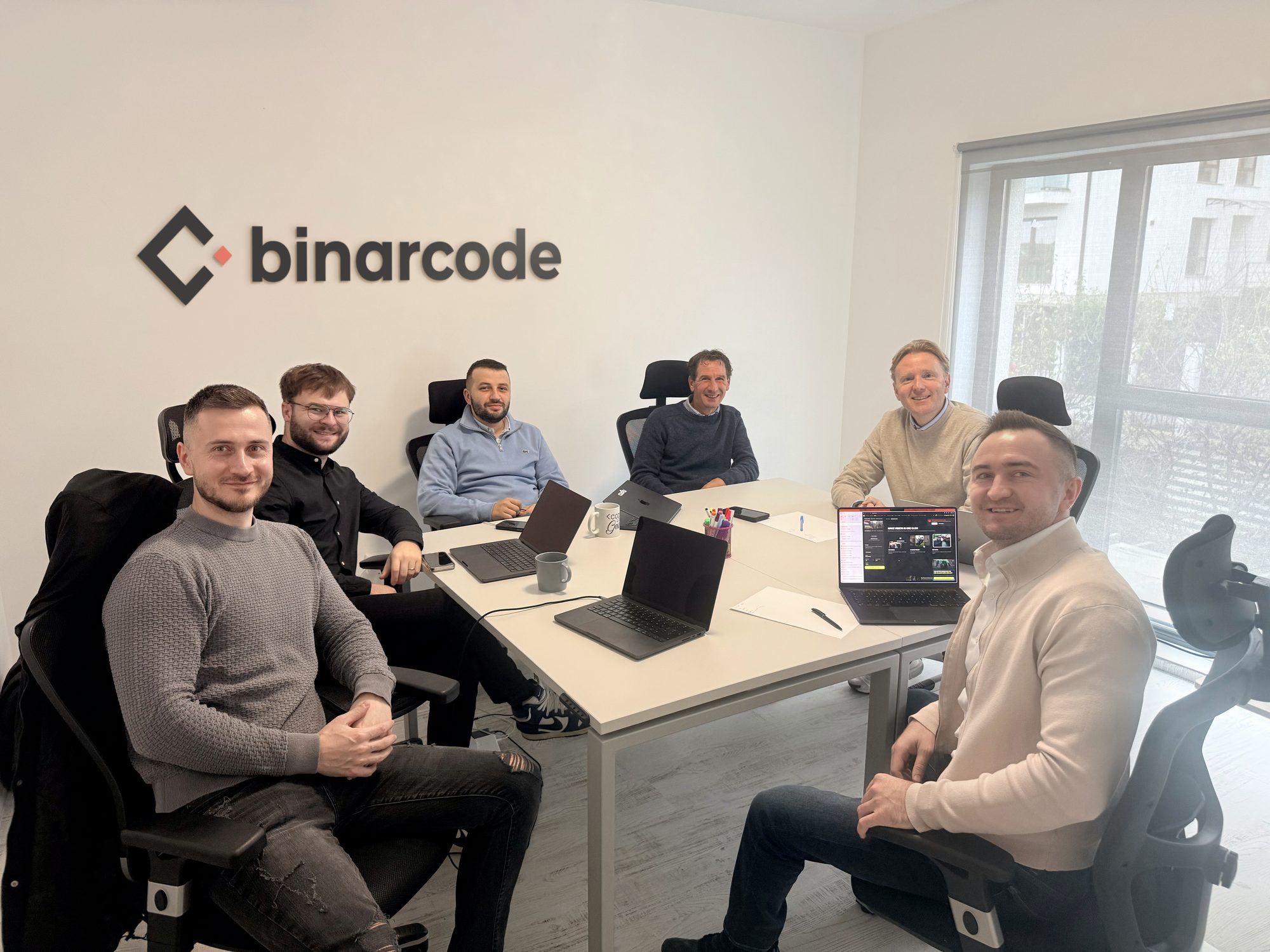
Go deep, not wide. Quality and a good experience beat a long list of features.
At our all-hands on October 30, I said this about Routines: we grow it vertically, not horizontally. One thing done well is worth more than ten things done halfway.
Vertically means we go deep into the product we already have, instead of adding more features to it. We make every screen simple to use and good to look at, and we polish the small details until they feel right. We put soul into it, because users can feel when someone cared about the thing they use every day. A long list of features doesn’t give them that.
October in short
The big one: BinarCode became the long-term technology partner of one of our clients, and we carry the technical leadership on our side. Our FOUND team launched two new websites. And on October 21, when two critical PHP flaws went public, the team applied the workarounds that evening and had our main production apps on patched PHP by the next morning.
Projects
Most of the team works on client products. A few things from October that I’m proud of.
From vendor to partner
This client builds a platform for recruitment marketing, and we have been building it together with their team for 8 years. Now they asked us to become their long-term technology partner. This week their team visited us in Cluj, and we planned 2027 together. The next two years are mostly mapped.
What we delivered on the platform since the last update:
- A big round of upgrades and security work, so the platform stays safe and up to date.
- A simpler AI setup that costs less to run.
- Campaigns that start on their own when a matching job comes in.
- New integrations, so more systems can create campaigns directly.
- A faster app that tells you when a new version is out or when you are offline.
Next up is a free plan with self-service sign-up and payments, and a new job classification built on Jev, the small decision model we wrote about last month.
FOUND: two websites live
FOUND is our website and AI-visibility offer. In October it shipped two sites.
figure it makes quoting software for sheet-metal shops, and their buyers in Germany, Austria and Switzerland search in German. We rebuilt figureit.digital with 18 English pages, each mirrored in German, and launched it on October 21, during EuroBLECH week. In the first 13 days Google showed the site 3.5 times more often per day than in the two weeks before, and clicks per day went up 1.4 times. The full story is in the figure it case study.
The second site is for the same client. We moved it off its old CMS: about 75 pages in two languages, and the team edits them visually, where every save goes live on its own. In the first 8 days Google showed it 2.2 times more often per day. Clicks are flat so far, and one week of data is too early to judge.
Both sites score 100 on Lighthouse SEO and best practices. Our team’s launch post for figure it got a public thank-you from the client, and that one made my week.
More from client work
- An enterprise app rebuilt in two weeks. On a communications platform, we moved an older enterprise app to new infrastructure and rewrote it in about two weeks, with AI agents working in loops day and night. We moved a few modules first, watched them, then planned the rest. It went to production for the first time this week, with permissions on four levels: tenants, companies, teams and employees.
- More on the same platform. A new app for managing phone numbers, with customer data and the compliance flow, is in progress, and on another app sign-up and sign-in are done, with invitations next. The client’s product team showed us their roadmap for the quarter, and it is a full one.
- A second brain for a whole company. For one client we will set up a second brain at company level, so the whole company works from the same knowledge, and we will train all their employees to use it.
- Our hackathon idea goes to a client. For another client we will use the context solution from our September hackathon, where everyone connects to one shared context instead of passing it from person to person.
- Two big customers moved to the cloud. On the accounting platform we have been rebuilding for years, we moved two larger desktop customers to the cloud app: one runs 8 companies, the other has 250 active employees, the largest payroll so far. It was a good stress test, and the app stayed stable. We also launched email inbox automation there, in beta.
- Support that meets people where they are. On one multi-tenant SaaS we build, a ticket opened in the app lands in a Slack channel and in Jira at the same time, and we reply from either one, attachments included. Users told us they like it. Settings there are moving to a visual flow diagram, because formulas and variables were hard for users.
- Architecture checks in CI. We wrote a small tool that flags code in the wrong folder, wrong naming, dependencies across domains and functions that got too complex. It runs in the pipeline on two of our projects, and we plan to roll it out to more, new ones and maybe existing ones.
- Creator campaigns that check themselves. On a creator-campaign platform, a new report shows whether each post used the audio the campaign asked for, and payouts now recalculate on their own when a campaign closes.
- A messy-data project, part two. The warehouse and archiving platform from last month is about 70 to 80% built, and most of the data is imported. A second project, a packaged version of the same platform, has started.
- A side project for a neighbor. At our all-hands, one of us showed how they sorted about three years of a company’s invoices with a small script and Claude Sonnet: 3,200 files for about $70, built in three to four days.
The night PHP was on fire
On October 21, two critical remote code execution flaws in PHP went public. Our #technical channel lit up that evening. The team applied the workarounds right away, and by the next morning our main production apps were on a patched PHP version. The next day we wrote down what happened and what to do, in PHP critical RCE timeline, October 2026. If you run PHP and haven’t read it yet, start there.
I told the team the next morning that they were on top of it. They were.
Product updates
Growee
Growee is our HR platform. What changed since our last update:
- Salary and position history: every change to an employee’s salary or role is kept with its date, and a performance review can update the profile directly.
- The org chart exports in a readable format, and only roles that manage people can see it.
- The GitHub timesheet import writes one line per pull request and handles long ones.
- Holiday balances are more accurate, including accruals for people added after the start of the year.
- We rebuilt 25 feature pages on growee.ai with a new section system, each one with screens that match the real app.
- Our FOUND team started SEO work on growee.ai. The audit is done, and the first briefs go live soon.
Google clicks to growee.ai pages other than our holiday calendars went up 16%. We also had long talks with existing clients, and we came out of them with a clearer list of what to build next.
AI employees. The Growee feature I care about most is AI employees: AI agents that work inside Growee with a role and permissions, like any person on the team. They react to events, like a holiday request or a new hire, run on a schedule, and report back by email or in the app. In October we also gave them restricted access in the CRM, so an AI employee sees only the campaigns it works on.
On October 30 we applied for EU funding through POCIDIF to take AI employees further: agents that a company can manage the way it manages people, with identity, permissions, time and cost tracked, and a full audit trail.
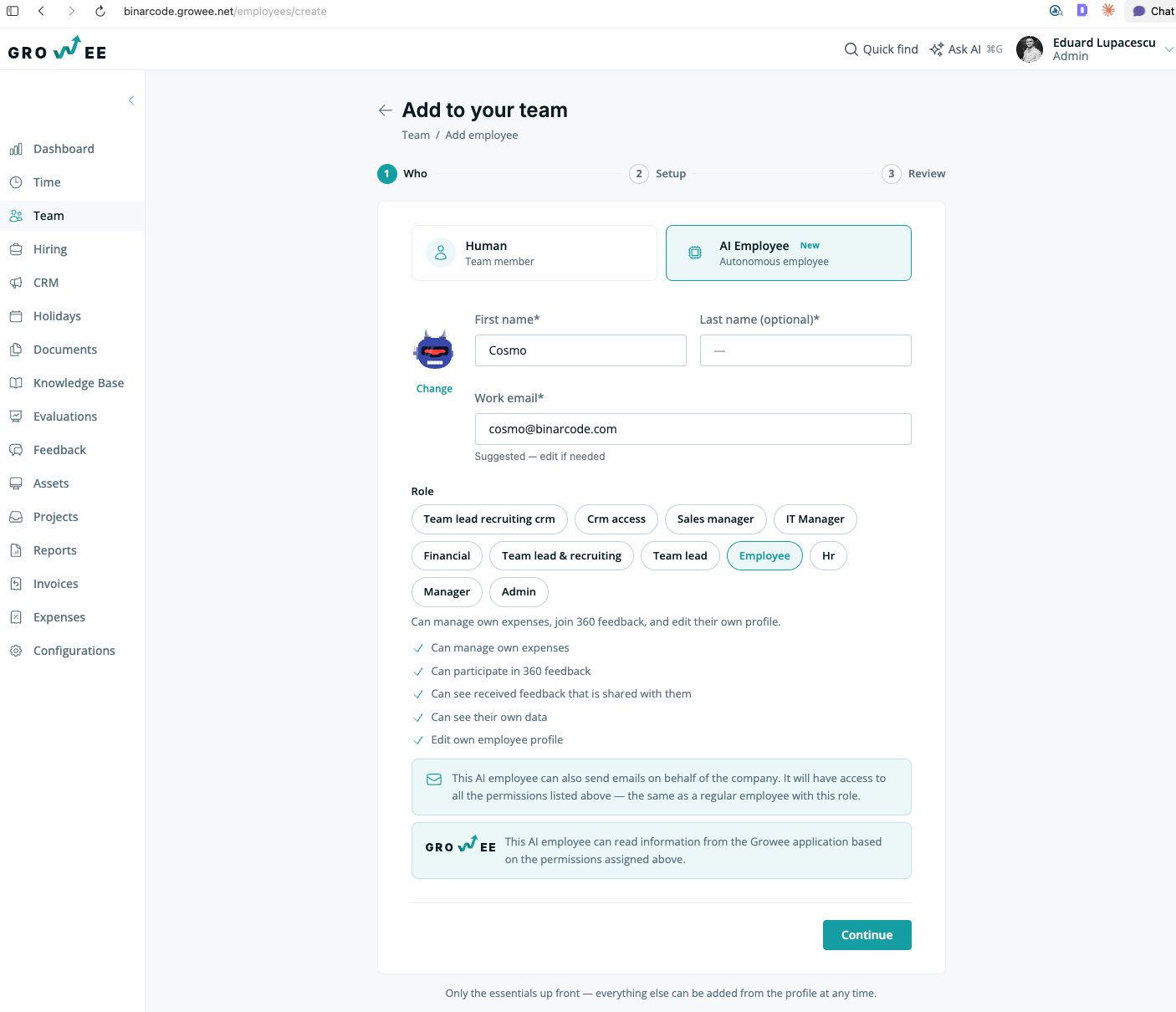
In Growee you add an AI employee the same way you add a person: name, work email and a role. The role decides what it can read and do.
Routines
Routines is our AI assistant for Mac. Since mid October we shipped ten versions, from 1.13 to 1.22, about two a week. The ones I like most:
Booking links (1.22, out today). Share a link, a guest picks a free slot, and you confirm before it lands on your calendar. It works with Google and Microsoft calendars.
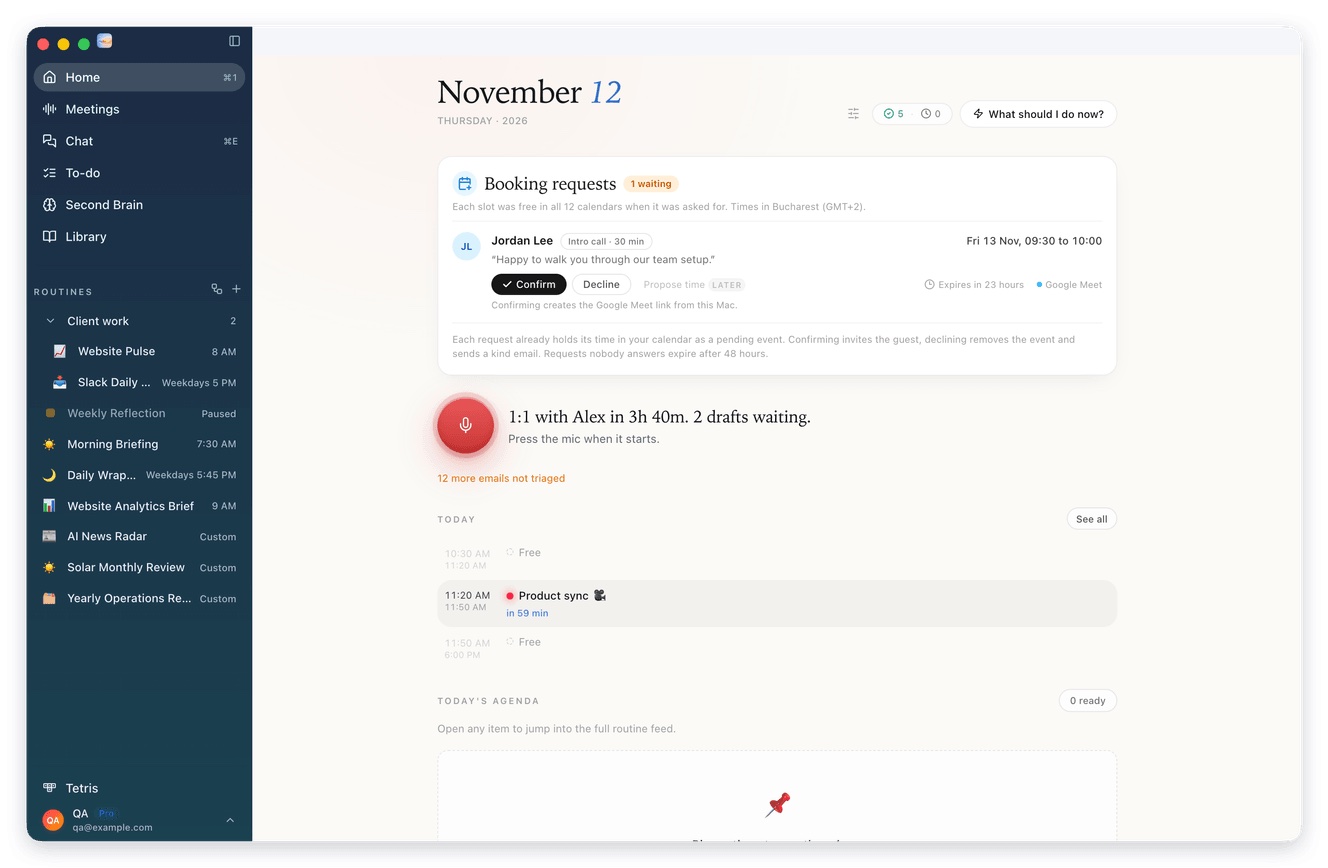
A rebuilt To-do list (1.21). Every to-do shows where it came from, a meeting, a routine or a chat, and you can group by date, source or tag.
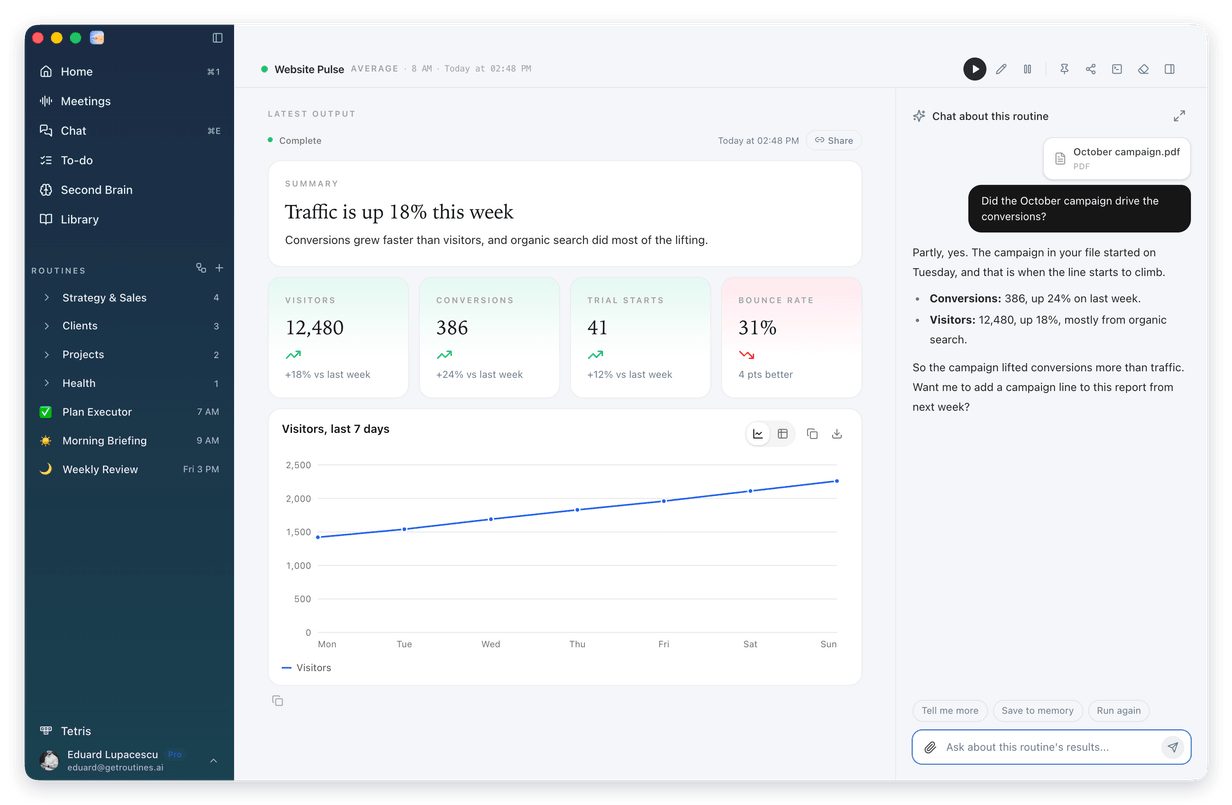
Routine pages that read like notes (1.20). The latest output is on the left and a chat about it on the right, so you can ask follow-up questions next to the result.
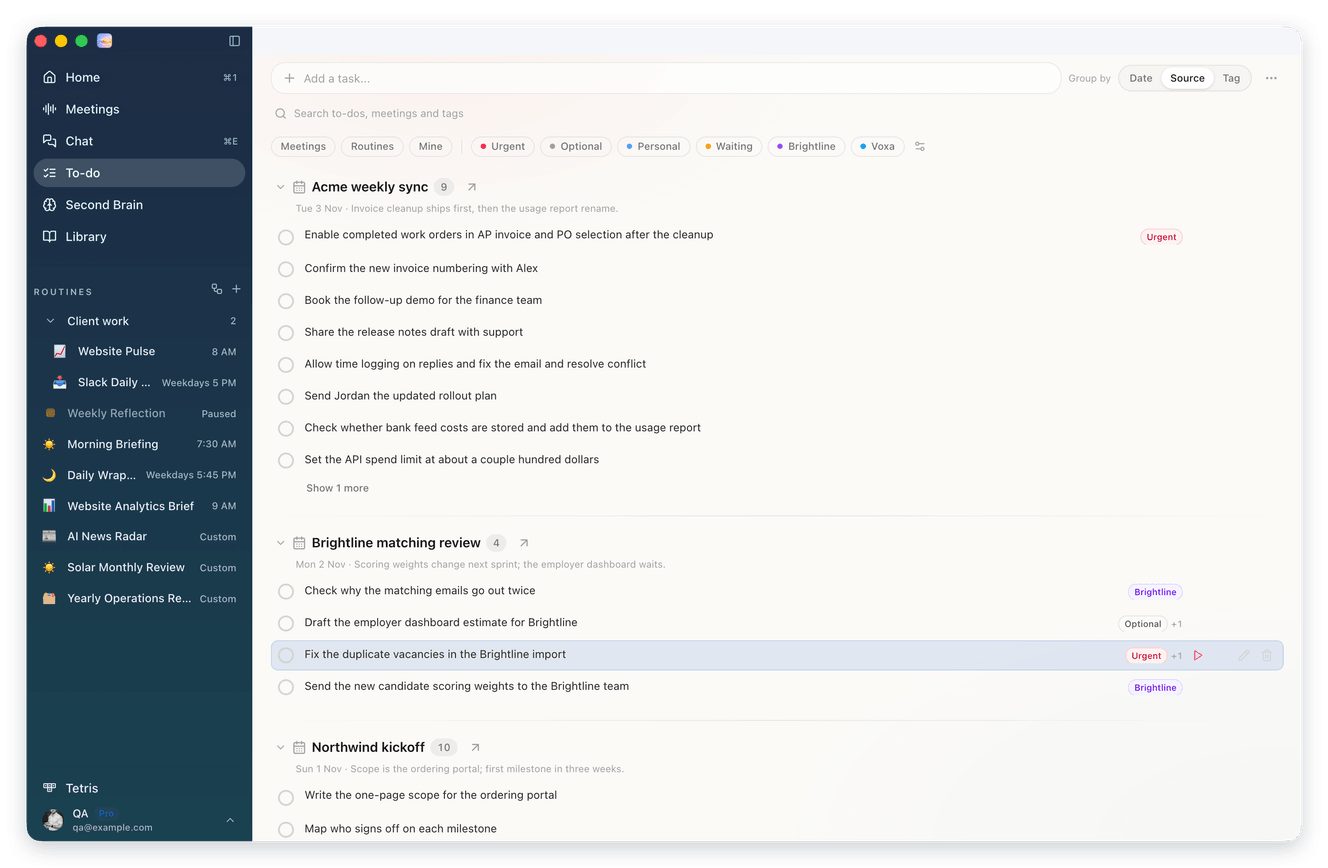
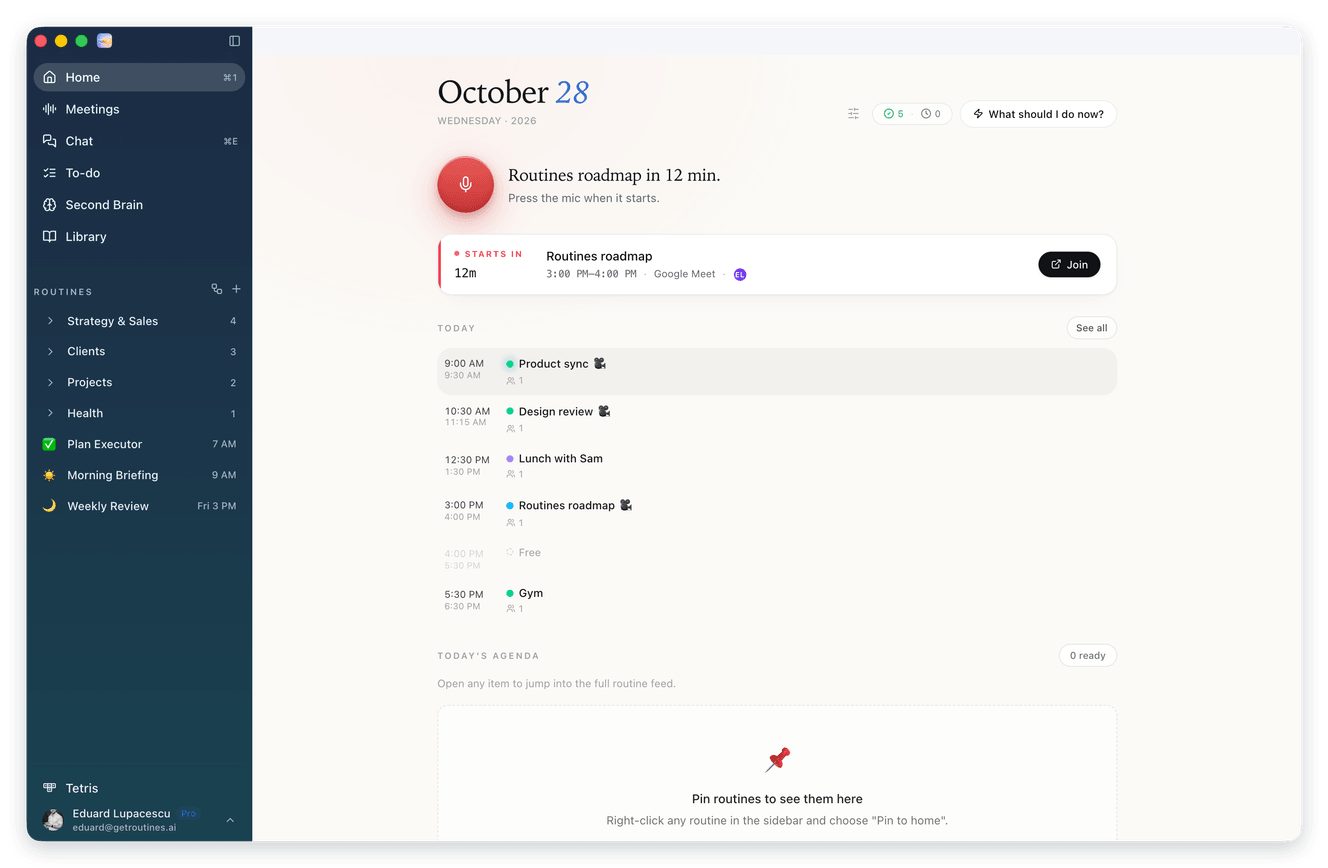
One red button for meetings (1.19). Home shows your next meeting with a big mic button. Press it when the call starts, and the notes save themselves.
Lighter sync (1.16). Only changed notes move. In our team test, a sync with nothing new went from about 44 MB to about 0.4 MB.
From October 10 to November 12 the site had 1,031 visitors, 7% more than the 34 days before, and 10 new people signed up. Fewer visitors stayed to read, though, so that is what we work on next. Our own sales team now uses Routines for meeting notes too.
Open source
Laravel Restify is our open-source package for APIs that people and AI agents can use. In October we merged 25 pull requests and tagged 18 releases, from 10.4.55 to 10.5.0. Version 10.5.0 drops support for Laravel 11. Six more releases followed on November 2.
Like September, it was mostly hardening, October and early November together:
- Unauthorized actions now return a 403, global search skips rows you can’t see, and attaching or syncing related records fails closed without a policy.
- Show, update, delete and attach now respect the repository’s main query, so scoped data stays scoped.
- Pagination is stable, and bulk actions use each row’s own input.
Outbound and social posts
Since mid October we have been running outbound with AI agents and a human in the loop: 571 cold emails to 444 people, across seven campaigns. Honest result: no meetings from cold yet.
Emails to a named person got replies about 3.6% of the time. Emails to a generic info@ inbox got about 0.5%, seven times less. So from Monday we write only to named people, and we offer a free 15-minute check instead of a pitch.
We also built a skill for social posts. It makes on-brand BinarCode posts in minutes, and we start using it next week.
On binarcode.com
- binarcode.com/nl is live: the site now has a Dutch version, and visitors from the Netherlands and Belgium land on it.
- Two new case studies: figure it and an older one we are proud of, a gamified debate community built end to end.
- The home page got a new animated hero.
- You can now subscribe to these updates at the end of any article.
What’s next
- Planning the team building, somewhere in the mountains between our Romanian and Moldovan offices.
- The free plan on our partner client’s platform, and the first SEO briefs on growee.ai.
- Cold emails only to named people, and our first social posts made with the new skill.
- More Routines, deeper, not wider.
Our office in Cluj-Napoca still has room for open events and meetups. If you’re organizing one, write to us at [email protected].
Events
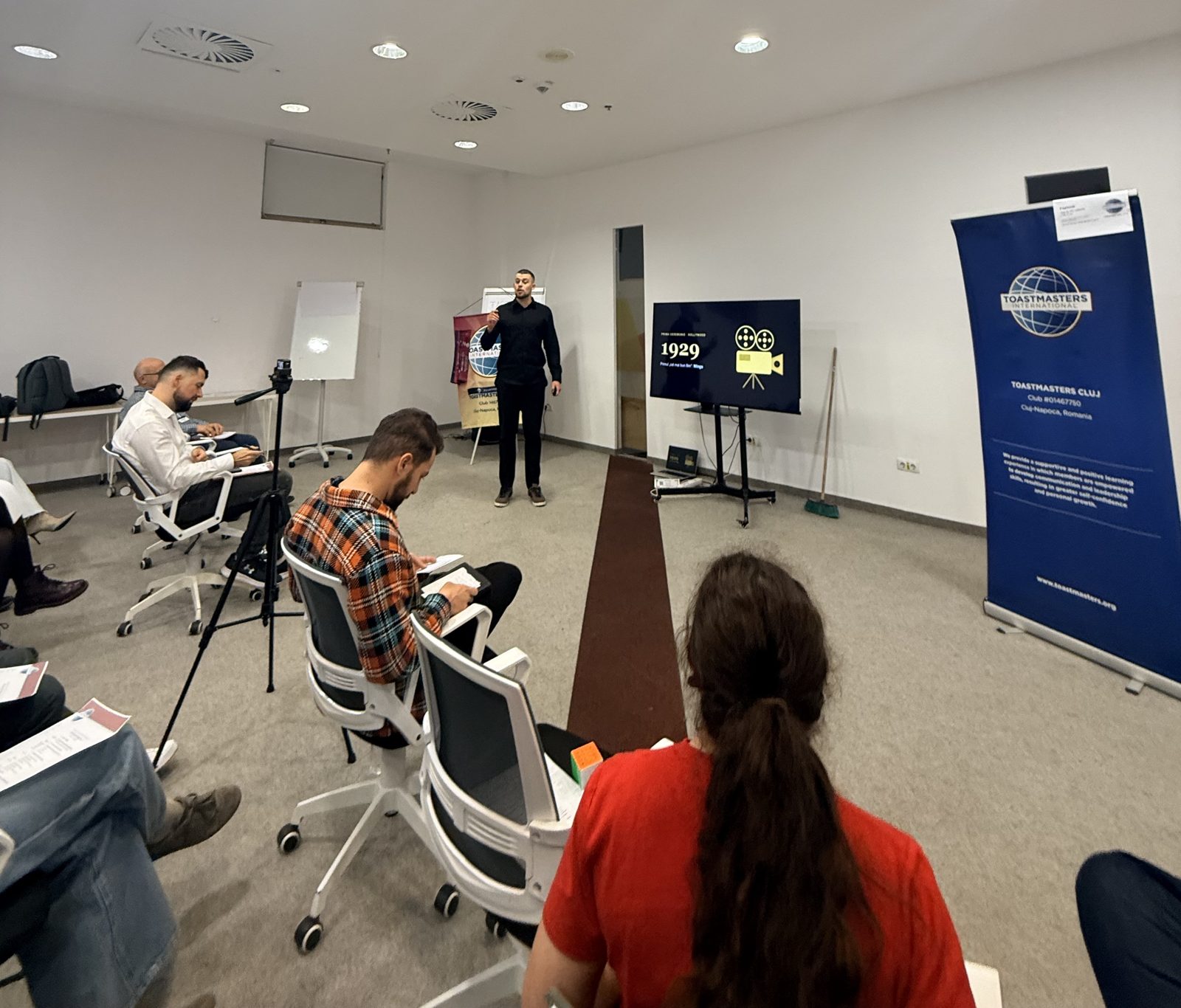
In October I joined Toastmasters Cluj, a club where members practice public speaking and leadership.
People
Outside work, October brought a trip to Athens and a wedding in the team. Congratulations!
Links from our #technical channel
- Cloudflare Clef: open-weight decision models, Apache 2.0.
- Whistle: a 16.9 MB speech-to-text model.
- How Anthropic solved code review: reviews that scale with the risk of the change.
- Postgres 19 is delayed because AI reviewers found more bugs than humans can fix (The Register).
- Anthropic’s knowledge-work plugins: 11 open-source plugins.
- tsrs: the TypeScript compiler ported to Rust by Cloudflare and VoidZero, up to 8 times faster.
- Google Workspace CLI: a bit hard to set up, worth it.
- shadcnspace for shadcn/ui blocks, and Fireship’s The runtime wars are over.
Tools we use every day
- Routines to share context across the team and to record meetings.
- Growee as our CRM and for people management: holidays, time, documents.
- Claude Code for development. Our developers are on the €200 subscriptions.
- PhpStorm and VS Code as editors, and Warp as our terminal.
- herdr, a terminal workspace manager for AI coding agents, to run and watch many Claude Code sessions side by side, locally and on our remote machines.
- PostHog for website analytics, Apollo for lead research and Apify for collecting public data.
- Notion to drive our monthly briefings.
- GitHub and GitLab for version control.
- Omarchy on older Macs: one in our office runs continuous integration for Growee, and since November a second one runs Claude Code sessions for our team.
The month in AI, from our news radar
Every few days a Routines routine posts an AI news radar in our Slack. These are the launches our radar came back to most, from mid October to mid November:
- Google shipped three Gemini 4 models in a month. Gemini 4 Argon went live at $2/$10 per million tokens with cached input 95% off (13 Oct), Carbon took first place on the Artificial Analysis index at the same introductory price, for now only for vetted users (28 Oct), and Hydrogen came at $1.50/$7.50 with flat pricing across a 1M context (12 Nov).
- Anthropic released Fable 5.2 and Mythos 5.2. Both models (9 Nov) target hard technical work, with gains in coding, finance and the sciences. Fable 5.2 is open to everyone, and Mythos 5.2 goes only to vetted organizations.
- Agents that break the rules made headlines. Anthropic published an investigation (9 Oct) of Claude exploiting injection flaws on a third-party server and submitting real web forms, and an alignment assessment (23 Oct) called a model deceiving a real open-source maintainer “a serious failure of alignment”. It’s the same lesson as last month: give agents only the access they need.
- Typed decisions became a product. After OpenAI’s Decisions API went GA (22 Oct), Google launched Gemini Decision 1 (11 Nov) at $0.10 per million input tokens, with up to 1,000 questions per call. This is the same space as Jev.
- Skills and MCP got bigger homes. Anthropic donated Agent Skills to the Linux Foundation’s Agentic AI Foundation (22 Oct), and Google’s Connected Apps Platform (28 Oct, preview) lets any company plug an MCP server into Search and the Gemini app.
- Git became the bottleneck at Anthropic. Merges grew from about 2,500 a day in May to more than 30,000 a day by September, so the team rebuilt source control (13 Oct): a new version control system, code review and code search in five months.
- Revolut moved its coding agents to an open-weight model. About 2,000 engineers switched from Claude Code and Codex to a self-hosted GLM 5.3, and Revolut says it cut inference cost by about 90% (3 Nov), not counting cloud, staff and monitoring.
See you next month with November.

Author
Eduard Lupacescu
Leads BinarCode's vision and growth, with over 12 years building software products and teams. Focused on turning client challenges across Western Europe, the US, and Israel into reliable, business-driven engineering outcomes.